Filling, Ceramic Reinforcement or Crown

What's the difference?
There isn't one restoration that is best for every tooth.
The goal is to choose the most appropriate treatment for the amount of tooth structure that remains. The more tooth structure we have, the more options we have to restore a tooth. Our goal is to keep your teeth a lifetime and therefore it is not always the best idea to simply cut down healthy tooth structure just to do a full 360-degree crown.
With today's modern technology, we can now just replace the broken, decayed or weakened area of a tooth by reinforcing the tooth with a ceramic overlay or inlay. This method not just strenghten and restores the tooth, but also leaves the option open to do a future full crown if further tooth destruction takes place.
Why not just leave the tooth until it breaks before treatment?
This seems like a viable option, but in reality these weakened teeth often fracture in a vertical dimension and thus make them unrestorable. Removal is then the only option.
The following table explains the differences between Composite fillings,
Ceramic Reinforcement and Crowns:

The goal isn't to place a crown automatically. It isn't automatic either to just place an inlay. The goal is to determine what your tooth actually needs.
For some teeth, a composite filling is the ideal treatment. For others, ceramic reinforcement can provide additional structural protection. When a tooth has lost too much structure, a full-coverage crown may be the more predictable option.
We don't believe every damaged tooth needs a full crown. Ceramic Reinforcement is often the most conservative option to restore and strengthen a weakened tooth to prevent future fractures and breakage. A vertical fracture can be catastrophic and in most cases, leads to tooth removal.
 |
We make use of dyes and ultraviolet light to help us to diagnose cracks and undermined cusps. |
|

Featured
Clear Aligners - No Wires!
No Wires. No Metal Braces. Just a Beautiful Smile.Orthodontics is the...

Smile Analysis- Identify problem areas
Kindly check your smile in a close-up mirror. With our unique...
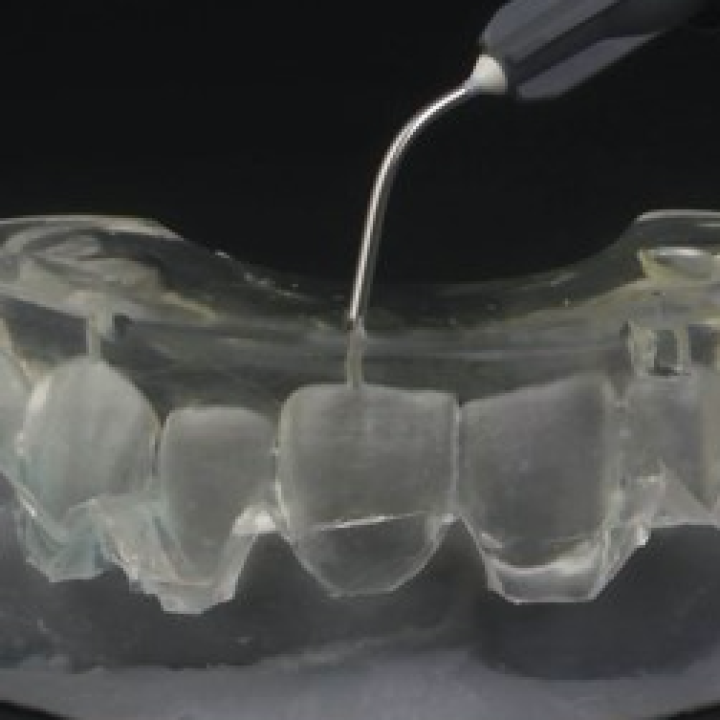
Resin Injection Moulding
The Resin Injection Technique (RiT) is the latest procedure to take...
Related

Is Ceramic Reinforcement right for you?
Every tooth is differentCeramic reinforcement isn't automatically...

Is your tooth strong enough to last?
The problem with large fillingsA tooth can look perfectly fine while...

What is Ceramic Reinforcement?
nA modern, conservative way to restore weakened teeth — often in...

